Compare Esports Team Jersey Sizes Before Ordering Online
A team jersey is no longer a simple fan item. For major esports organizations, it is part of the commercial infrastructure: sponsor inventory, brand identity, seasonal campaign asset, and, increasingly, a direct-to-consumer revenue line.
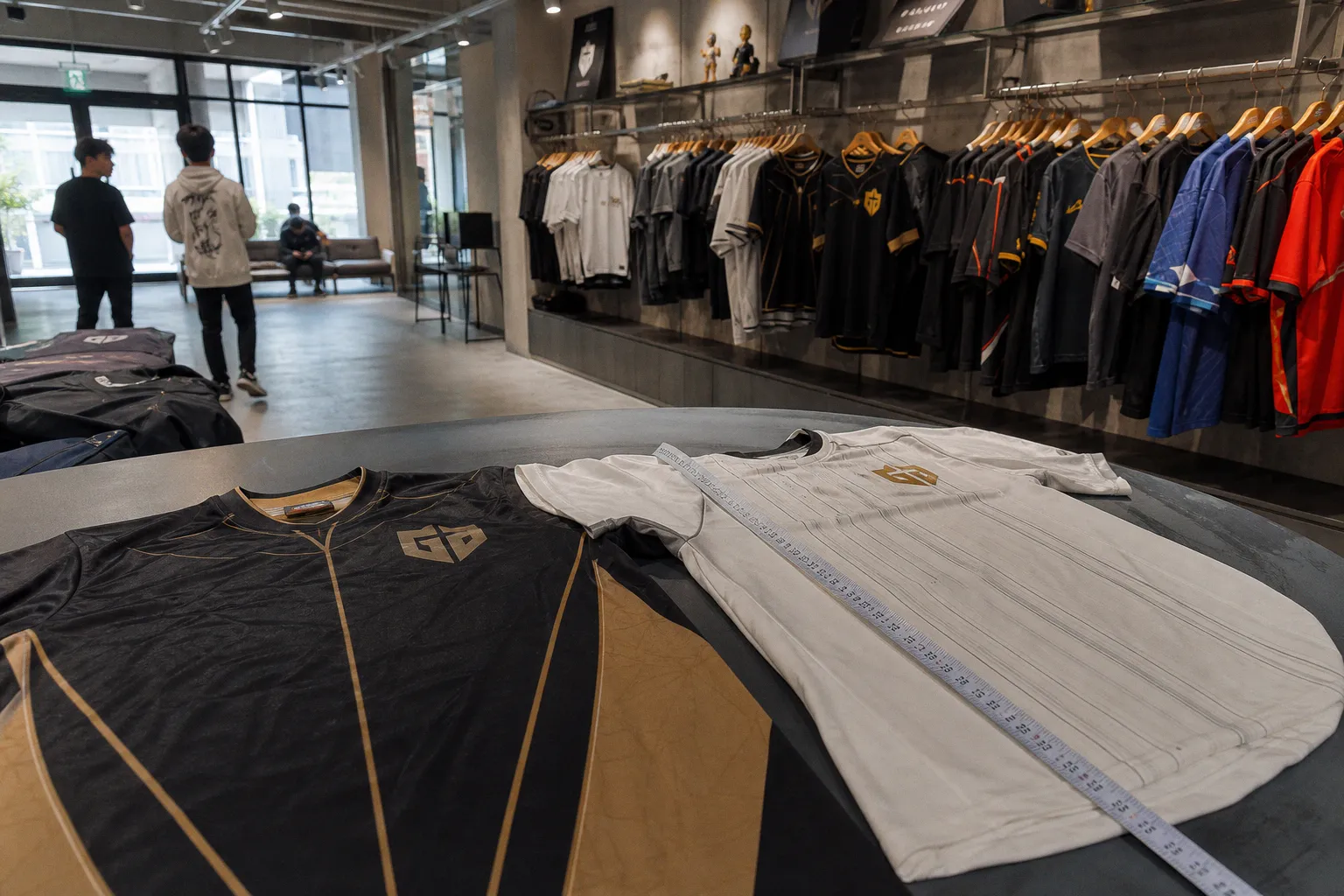
The practical question, then, is not whether a buyer is usually a Medium or a Large. It is how to check and compare esports team jersey sizes before ordering online when every organization may be using a different manufacturing partner, a different regional standard, and a different cut for player versus fan apparel. In esports, the letter on the label is the least reliable data point in the transaction.
Why standard retail sizing does not transfer cleanly to esports jerseys
Traditional retail sizing benefits from volume, mature supply chains, and some degree of consumer expectation. Esports merchandise is operating in a more fragmented environment. Organizations may release a jersey through their own store one year, a third-party provider the next, and a limited capsule with a different vendor for an international event. The customer sees one club badge; the supply chain behind that badge may have changed materially.
This is why comparing esports team jersey sizes before ordering online requires looking beyond the storefront presentation. A jersey sold through a global merchandise provider such as We Are Nations, ESL Shop, or Meta Threads will follow that provider’s own measurement guide. Those guides are not interchangeable, even when the product photography looks similar. A Large from one provider should not be treated as equivalent to a Large from another.
The issue is compounded by how esports jerseys are constructed. Many are made from performance polyester or dry-fit style fabrics rather than standard cotton. That serves a clear brand and product purpose: the garment looks closer to what players wear on stage, prints sponsor marks sharply, and supports a technical sportswear narrative. But polyester behaves differently from cotton. It can have less forgiving stretch, a smoother but less pliable drape, and a cut designed around the silhouette of a competitive jersey rather than a casual T-shirt.
For organizations, this is a brand consistency decision. For the buyer, it means the “usual size” logic becomes unreliable. A cotton T-shirt may tolerate a slightly narrow chest or shorter length because the fabric relaxes with wear. A 100% polyester jersey, especially in a more athletic cut, is less generous. The margin for error is smaller.
The size label is branding language; the measurement chart is operational truth.
That distinction matters most in online purchasing, where the consumer cannot test shoulder width, sleeve opening, or length in person. The size chart is not a secondary detail. It is the conversion point where brand promise meets product reality.
Regional sizing is the first structural variable
The esports market is global, but apparel sizing is not. Organizations based in Asia often use standards that run one to two sizes smaller than typical North American or European retail sizing. This is not a defect; it is a regional production and grading norm. The problem emerges when an international fan base reads the size dropdown through its own domestic assumptions.
A supporter in Berlin, Toronto, or Los Angeles may interpret XL as a familiar retail category. The same label on a jersey produced to an Asian size block may feel closer to an L, or even an M, depending on the cut and manufacturer. Conversely, a buyer accustomed to Asian sizing may find a Western replica jersey boxier than expected. The regional starting point affects not only width but also length, shoulder proportion, and sleeve drop.
This is especially relevant for clubs with cross-border fan bases: Korean, Chinese, Japanese, and Southeast Asian organizations selling to Western audiences; North American teams releasing event jerseys for international tournaments; European clubs working with global esports merchandise houses. The club’s competitive identity may be regional, but its commerce operation is international.
A useful way to frame the comparison is not “Which size am I?” but “Which measurement system is this store using?”
| Sizing factor | What it usually means for the buyer | Operational implication |
|---|---|---|
| Asian regional sizing | Often one to two sizes smaller than Western retail expectations | Buyers may need to size up after comparing measurements, not by instinct |
| North American sizing | Typically broader through the chest and torso | A familiar label may still vary by merchandise provider |
| European sizing | Often more structured than U.S. casual retail, but varies widely | Chest and length measurements remain more reliable than the letter size |
| Event or limited-run jersey | May be produced by a different vendor from the regular season jersey | Previous purchases from the same team may not predict current fit |
| Player Edition cut | More form-fitting, closer to performance apparel | Less tolerance for measurement error |
| Fan or Replica Edition cut | Usually more relaxed and retail-oriented | More forgiving, but still dependent on provider chart |
This table is not a substitute for the store’s own chart. It is a reminder that esports apparel sits at the intersection of regional standards, sport-inspired design, and outsourced production. A team badge does not standardize the garment.
The safest approach is to treat every new jersey release as a new product, even if it is from the same organization. A club may maintain visual continuity while changing supplier, fabric, collar structure, or fit profile. Rebranding cycles, sponsor refreshes, and tournament-specific launches can all trigger production changes that are invisible until the jersey arrives.
Player Edition versus Fan Replica is a real fit decision
The distinction between Player Edition and Fan Edition is often presented as a pricing or authenticity choice. In sizing terms, it is more structural than that. Player Edition jerseys are frequently designed to be closer to what the team wears competitively: slimmer through the torso, cleaner in the shoulder line, and less like a casual streetwear item. Fan Replica jerseys tend to be more forgiving, with a cut intended for broader retail adoption.
This has commercial logic. A Player Edition product carries scarcity and credibility. It lets the buyer feel closer to the professional environment and gives the organization a premium tier. A Replica Edition supports scale: more accessible pricing, easier fit for the mass audience, and fewer barriers to purchase.
But customers need to understand that these categories are not merely marketing labels. They affect how the jersey sits on the body.
A Player Edition may be the correct choice if the buyer wants a sharper, athletic silhouette and is comfortable with a closer fit. It is the wrong choice if the buyer expects the relaxed behavior of a hoodie-layering fan shirt. A Fan Replica may be less precise visually, but it often performs better as everyday apparel because it leaves more room across the chest, waist, and shoulders.
This distinction becomes more important when names, numbers, or sponsor patches are added. Custom-printed jerseys may have return restrictions that vary by team store. Since policies differ by organization and product, the financial risk of guessing rises sharply when personalization enters the order.
The better operating model is simple: decide first whether the intended use is collection, match-day wear, streetwear layering, or active use. Then evaluate the edition and size through that use case.
1. For display or collection, exact body fit may matter less, but preserving the print and fabric shape matters more. Avoid an overly tight size if the jersey may be worn occasionally.
2. For regular wear, prioritize chest width and length over the label. The jersey should not pull across sponsor logos or sit too high at the hem.
3. For layering, compare against a shirt or light sweatshirt worn underneath, not against bare-body measurements alone.
4. For a Player Edition purchase, assume less spare room unless the chart proves otherwise.
5. For a Fan Replica purchase, still measure carefully; “replica” does not guarantee a Western casual fit.
The recurring mistake is treating premium authenticity as a sizing upgrade. It is not. It is a product tier with a different design brief.
The flat-lay method is the closest thing to reliable due diligence
Body measurements can help, but the most dependable comparison is usually garment-to-garment. The reason is practical: people know how a current shirt feels on them. If that shirt fits well, its dimensions provide a realistic benchmark for the jersey.
The method is straightforward, but it has to be done with discipline. Choose a shirt that fits the way you want the esports jersey to fit. If the target is a relaxed jersey, do not measure a tight athletic top. If the target is a Player Edition fit, do not measure an oversized cotton tee and expect the result to translate.
Lay the shirt flat on a hard surface and smooth it without stretching the fabric. Then take two primary measurements:
- Chest width: measure straight across from armpit to armpit while the garment is flat. This is usually the most important number because it determines whether the jersey will pull across the chest and sponsor panel.
- Length: measure from the high point of the shoulder down to the bottom hem. This determines whether the jersey sits at the intended point on the torso.
- Shoulder width, if provided by the store: compare seam to seam across the back. This is useful for more structured cuts.
- Sleeve opening and sleeve length, if available: especially relevant for buyers with broader arms or for jerseys with tighter athletic sleeves.
- Hem width, when listed: a jersey can fit the chest but feel narrow at the waist if the cut tapers.
The key is to compare flat measurements with flat measurements. If a store lists chest width as a flat armpit-to-armpit figure, do not compare it directly with a full chest circumference unless you double the flat measurement. If the chart provides circumference, convert accordingly. Confusing width and circumference is one of the most common causes of sizing errors.
A good fit decision is not made in the size dropdown; it is made with a tape measure before the dropdown is touched.
There is also a governance point here for organizations. The better-run merchandise operations publish clear, product-specific charts and define how measurements are taken. They reduce uncertainty before it becomes a support ticket. In a sector where apparel ROI depends on repeat trust, that clarity is not cosmetic. It is part of the customer infrastructure.
For buyers comparing multiple teams, the disciplined version of the process looks like this:
1. Select the exact jersey release, not just the organization’s store.
2. Identify the merchandise provider or store platform if visible.
3. Open the product-specific size chart.
4. Measure a current well-fitting shirt flat across the chest and from shoulder to hem.
5. Compare those numbers against the chart, allowing for the fabric and edition.
6. Check whether the jersey is Player Edition, Fan Edition, Replica, or another cut.
7. Review the store’s return rules before adding customization.
This is also where broader digital shopping habits are useful. Consumers already compare specifications when choosing electronics, travel gear, or services; the same evidence-based approach belongs in apparel. For adjacent consumer guidance outside esports, resources covering practical purchasing and lifestyle decisions, such as news, culture, leisure, and everyday advice, reflect the same principle: online decisions improve when the buyer reads the operational details, not only the headline description.
Fabric composition changes the margin for error
Material is not a minor specification in esports jerseys. It affects fit, durability, print behavior, and comfort. A common standard is 100% polyester, often presented through performance or dry-fit language. The advantages are clear: lightweight feel, moisture management, vivid sublimated graphics, and a closer association with professional sports apparel.
The trade-off is that polyester does not behave like cotton jersey knit. It may not relax in the same way after wear. It may feel smooth but not stretchy. It may drape away from the body differently, especially in larger sizes or boxier replica cuts. If the jersey is slightly too small, the fabric may emphasize the mistake rather than absorb it.
This matters because many esports jerseys are dense with visual assets: sponsor marks, team crest, manufacturer logo, league patches, player names, and seasonal graphics. When the garment is too tight, those elements can distort. A sponsor logo pulling across the chest is not only uncomfortable; it undermines the design system the organization paid to build.
From the club’s perspective, fabric choice sits inside a broader merchandise strategy. Polyester supports print consistency and a pro-level identity. Cotton may be more familiar to casual consumers, but it does not always carry the same competitive-stage association. The organization is balancing brand image, supplier capabilities, price point, and margin. The buyer experiences that balance as fit.
The practical consequence is simple: if the chart puts you between two sizes, fabric and cut should decide the direction. A form-fitting Player Edition in polyester offers less forgiveness than a relaxed Replica. If layering or casual wear is the plan, the larger of two close sizes may produce better utility. If a sharp stage-style fit is the goal, the smaller size may work — but only if the chest and length measurements support it.
Avoid assuming that every esports jersey uses the same material. Some releases may include different blends, mesh panels, heavier collars, or alternate sleeve construction. Event jerseys and special collaborations may depart from the mainline product. The chart and product description are the controlling documents.
Comparing across organizations: what the label cannot tell you
The esports customer often buys across teams, leagues, and regions. A League of Legends supporter may own jerseys from Korean and European clubs. A Counter-Strike follower may buy from a Danish organization one month and a Brazilian team the next. A Valorant fan may move between regional league stores, tournament capsules, and club-operated shops. The wardrobe becomes global; the sizing logic does not.
That is why “I bought a Large from another esports team” is weak evidence. The previous jersey may have come from a different provider, been cut for a different market, or used a different fabric. Even within one organization, a rebrand or new sponsorship cycle can reset the apparel program. When a club changes its visual identity, it may also change its supplier, construction standards, and fit philosophy.
A more reliable comparison uses measurement bands. Instead of thinking in letters, build a small personal reference:
| Your reference point | What to record | Why it matters |
|---|---|---|
| Best-fitting T-shirt | Flat chest width and length | Baseline for casual comfort |
| Best-fitting sports jersey | Flat chest width, length, shoulder width | Better comparison for polyester apparel |
| Preferred oversized layer | Flat chest and hem width | Useful if wearing the jersey over hoodies or long sleeves |
| Previous esports jersey | Provider, edition, size, measurements | Helps identify which suppliers run narrow or long |
| Problem garment | What failed: chest, length, shoulders, sleeves | Prevents repeating the same sizing error |
This small record is more valuable than brand loyalty assumptions. It turns sizing into data. For organizations, this is also the direction the market should move: clearer size architecture, better product notes, and more consistency across seasonal drops. The esports apparel category is mature enough to treat sizing as part of its revenue strategy, not as a back-office afterthought.
The management lesson is straightforward. Teams invest heavily in content, competitive rosters, partnerships, and rebranding campaigns, but the merchandise experience is often where a global fan becomes a paying customer for the first time. A poor fit can make that first transaction feel careless. A clear sizing system can make the same transaction feel professional.
The ordering decision: practical hierarchy before checkout
Before buying, the hierarchy should be evidence-led. Start with the exact product, not the team. Then move through edition, region, fabric, and measurements. The final size should be the outcome of those variables, not a reflex.
The most dependable sequence is:
1. Confirm the product version. A home jersey, away jersey, event jersey, and collaboration jersey may not share the same fit.
2. Identify whether it is Player Edition or Fan Replica. Treat Player Edition as a more fitted product unless the chart says otherwise.
3. Check for regional sizing signals. If the organization or supplier is Asia-based, be alert to a possible one-to-two-size difference from Western expectations.
4. Read the material description. Performance polyester or dry-fit fabric usually has less casual stretch than cotton.
5. Measure a comparable garment flat. Chest width and length are the core numbers.
6. Compare measurement units carefully. Do not confuse flat width with full circumference.
7. Account for intended use. Wearing over a hoodie, wearing casually, and wearing as a fitted collector piece are different sizing briefs.
8. Review return rules before customization. Names, numbers, or special printing may reduce flexibility depending on the store.
None of these steps is complex, but together they replace guesswork with a controlled process. That is what the esports merchandise market increasingly requires. The category is too international, too supplier-dependent, and too segmented by edition for casual retail assumptions to hold.
For the buyer, the benefit is obvious: fewer returns, fewer sunk costs, and a jersey that actually enters the wardrobe rather than remaining in its packaging. For the organization, the benefit is broader: higher customer confidence, stronger merchandise conversion, and a more credible brand operation.
The next stage of esports retail will not be defined only by better graphics or bigger sponsor placements. It will be defined by operational maturity — accurate charts, transparent product tiers, consistent vendor communication, and fewer surprises after checkout. Until that standard is universal, the responsibility remains shared. Teams must publish better data; buyers must use it.
The correct jersey size is not found by loyalty to a label. It is found by comparing the garment in front of you with the garment that already fits. That is the disciplined way to order esports team apparel online, and it is the only method that respects how global this market has become.