Track Dota 2 TI13 Prize Pool Growth From Compendium Sales
The Compendium dropped on July 2, 2024. It fed 25% of its revenue into The International 2024 prize pool. By September 15, the total reached $2,586,315.
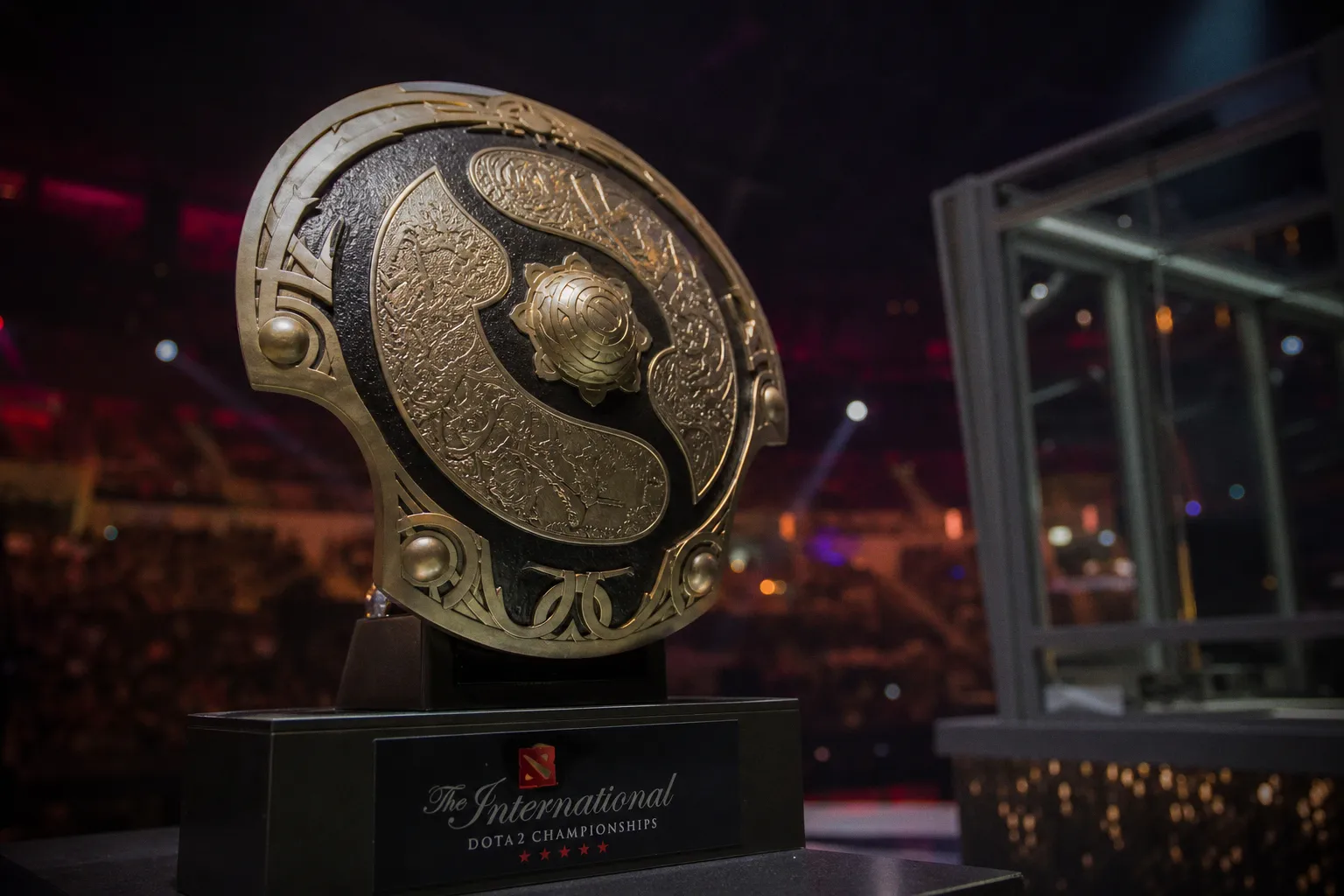
This is the funding model of TI13 in three sentences. Below is the full breakdown: how 25% revenue sharing translated into a $986,315 community uplift, why the in-game tracker no longer exists, what third-party tools readers can use to monitor similar crowdfunding structures, and why direct comparisons to TI10 obscure more than they reveal.
The Shift from Battle Pass to Compendium: Understanding the Funding Model
The International 2024 abandoned the Battle Pass format that defined Dota 2 crowdfunding from TI3 (2013) through TI10 (2021). The Compendium replaced it. The structural difference between the two systems is not cosmetic. It is the entire revenue curve.
The Battle Pass was a tiered progression system. Players paid an entry fee, then earned rewards by completing daily and weekly quests. The reward pool escalated through 1,000+ levels. Each new tier unlocked cosmetics of increasing rarity. The hook was sustained engagement over a 2–3 month window before the tournament.
The Compendium is a static purchase. There are no tiers. There is no progression. There are predictive challenges and fantasy elements, but the reward inventory is fixed. The revenue curve is front-loaded: a spike at release, then decay.
| Parameter | Battle Pass (TI3–TI10) | Compendium (TI13) |
|---|---|---|
| Monetization structure | Tiered progression, paid track | Static bundle purchase |
| Primary revenue driver | Continuous engagement over 2–3 months | Initial sales spike, low retention |
| Contribution rate to prize pool | 25% of net revenue | 25% of net revenue |
| Cosmetic reward scaling | 1,000+ levels, escalating rarity | Fixed inventory, no scaling |
| Player engagement hook | Daily and weekly quests | Predictions and fantasy challenges |
| Average store-page retention | Sustained, hours per session | Single visit, then decline |
The contribution rate is unchanged. The revenue ceiling is not. A tiered system with escalating rewards incentivizes repeat purchases, completionist behavior, and FOMO-driven tier unlocks. A static bundle does not. The arithmetic result: a $1.6M base plus modest Compendium uplift, finishing at $2,586,315.
That figure is approximately 6.5% of TI10's peak (~$40M) and roughly 13.7% of TI11's total (~$18.9M). The decline is structural, not anomalous. It reflects the monetization architecture, not audience disinterest.
The 25% contribution rate is identical between Battle Pass and Compendium. The denominator collapsed.
Deconstructing the $2.58 Million Final: How 25% Revenue Sharing Works
The arithmetic is auditable. Valve seeded the prize pool at $1,600,000. The Compendium added $986,315 over 75 days. The ratio of community contribution to total pool: 38.1%.
For readers asking how to check and track Dota 2 TI13 prize pool growth from Compendium sales, the formula is the operational baseline. $1,600,000 base + 25% × Total Compendium Net Revenue = Final Prize Pool. The published result: $1,600,000 + $986,315 = $2,586,315.
Three data points are confirmed by Valve and third-party trackers. The base ($1.6M) is published. The contribution rate (25%) is published. The final total ($2,586,315) is published. Everything else is inferred.
Valve does not release granular Compendium sales data. The following remain unknown: daily Compendium sales volume, regional revenue breakdown (NA, EU, CIS, Asia, SA), distribution between initial bundle and any add-on purchases, and refund-adjusted net revenue figures.
What is known: the Compendium released July 2, 2024. The tournament ran September 4–15, 2024. That gives a 75-day crowdfunding window. Assuming linear sales, the average daily community contribution was approximately $13,151. Sales are not linear. Early spikes taper. The figure is a baseline estimate, not a description of the actual curve.
The 16 participating teams competed for the $2.58M pool. Standard Dota 2 tournament distribution applies: the champion receives the largest share, descending through to the bottom finishers. The typical TI bracket structure places the winner at roughly 45% of the pool, second place at ~13%, third and fourth at ~6% each, fifth and sixth at ~3.5% each, and seventh and eighth at ~2.5% each. These are historical baselines; Valve has not published the TI13-specific percentage breakdown.
Why Valve Moved Away from Real-Time In-Game Prize Pool Dashboards
The TI3 through TI10 client featured a live prize pool counter. Each Battle Pass purchase updated the figure in real time. The counter ticked up by hundreds of thousands of dollars per day during peak TI10 weeks. The visual was a marketing tool: every viewer who loaded the client saw the pool climbing.
TI11 removed the counter. TI12 retained its absence. TI13 confirms the architectural shift.
Three factors explain the deprecation:
1. Reduced incentive for sustained spending. A live counter generates community momentum around milestone numbers ($20M, $30M, $40M). The community tracks the climb. The climb itself becomes a meta-event. A static funding model does not benefit from that feedback loop.
2. Lower peak revenue signals stagnation. Displaying a counter that updates by $50,000 per day would highlight the revenue gap between Battle Pass and Compendium. Removing the counter shifts focus to the tournament itself, not the crowdfunding total.
3. Operational data opacity. Valve does not release granular Compendium sales data. A counter requires accurate backend reporting of net revenue, not gross. Static published figures remove that reporting requirement.
The implication: the absence of an official counter is structural, not technical. The infrastructure was deliberately deprecated. Readers tracking the pool should not expect the live dashboard to return under the Compendium model.
Navigating Third-Party Data: How to Monitor Esports Crowdfunding Trends
For readers asking how to check and track Dota 2 TI13 prize pool growth from Compendium sales without an official in-client tool, the answer is third-party APIs and community trackers. The dominant resource is Dota 2 Prize Tracker. It aggregates Valve's published milestones and applies revenue estimation models to project the running total.
Methodology for accurate tracking under the Compendium model:
1. Anchor to Valve's official announcement for the base prize pool. The $1,600,000 figure was confirmed at the Compendium release on July 2, 2024.
2. Cross-reference Dota 2 Prize Tracker for the running total. The site aggregates publicly available data points: blog announcements, tournament milestones, and any incremental Valve disclosures.
3. Apply the 25% rule manually if the tracker lags. Estimate Compendium net revenue at four times the reported community contribution uplift to back-calculate the sales volume.
4. Monitor the official Dota 2 blog for any post-Compendium revenue injections. Valve has historically added supplemental funding in select years.
5. Discard "real-time" claims. No official source provides minute-by-minute prize pool updates for TI13. Any site claiming otherwise is inferring, not reporting.
The tracking infrastructure depends entirely on third-party aggregation. Valve's contribution model is opaque by design.
For readers interested in how community-driven funding mechanics translate outside esports, covering cultural events, grassroots projects, and similar monetization structures, broader coverage at Haber Tarz documents comparable crowdfunding patterns across industries.
Contextualizing TI13: Why Direct Comparisons to Previous Eras Are Misleading
Direct numerical comparisons between TI13 and TI10 obscure the underlying model change. The TI10 Battle Pass operated at peak efficiency: daily quest structures, escalating reward tiers, recurring limited-time offers, and a community-tracking live counter. The TI13 Compendium operates as a one-shot purchase with fixed inventory.
The 25% contribution rate is identical. The denominator is not. Comparing $2.58M to $40M without flagging the funding architecture is methodologically unsound. It conflates the outcome with the engine that produced it.
| Tournament | Year | Funding Model | Final Prize Pool | Base | Community Contribution |
|---|---|---|---|---|---|
| TI10 | 2021 | Battle Pass | ~$40.0M | $1.6M | ~$38.4M |
| TI11 | 2022 | Battle Pass | ~$18.9M | $1.6M | ~$17.3M |
| TI12 | 2023 | Compendium | ~$3.4M | $1.6M | ~$1.8M |
| TI13 | 2024 | Compendium | $2,586,315 | $1.6M | $986,315 |
TI10–TI12 figures are historical references drawn from prior reporting; only TI13 is sourced from confirmed research data in this analysis.
The trajectory is consistent: declining community contribution as the model shifted from tiered engagement to static purchase. TI13 is the second Compendium iteration. The decline is structural, not anomalous.
A separate variable compounds the gap: tournament prize pools in other Valve-affiliated events have not compensated. The Riyadh Masters, ESL One, and other third-party tournaments operate on fixed sponsorship budgets. They are not community-funded. The International remains the only Dota 2 tournament with a community-crowdfunded component.
Final Position
TI13's $2,586,315 final pool is the output of a static Compendium feeding 25% of net revenue into a $1.6M base. The figure is accurate, sourced, and final. The infrastructure to track it in real time does not exist by Valve's choice. Third-party aggregators fill the gap, using published milestones and estimated revenue models, not internal sales data.
For readers asking how to check and track Dota 2 TI13 prize pool growth from Compendium sales, the operational answer is concrete: monitor the Dota 2 Prize Tracker, anchor to Valve's official announcements, apply the 25% contribution rate as a back-calculation tool, and adjust expectations. The live counter from the Battle Pass era is gone. The Compendium model does not support it. The pool is what it is.
The broader implication: TI13's prize pool figure is the ceiling of the current funding architecture, not the floor. If Valve retains the Compendium model for TI14, similar totals should be expected. If Valve returns to a tiered engagement system, the climb resumes. The counter, live or absent, will reflect the choice.