How Esports Events Became Live Entertainment Platforms
The defining statistic sits at the top: 6.94 million peak viewers for the 2024 League of Legends World Championship Grand Final between T1 and Bilibili Gaming, per Esports Charts. The 2025 edition followed at 6.7 million.
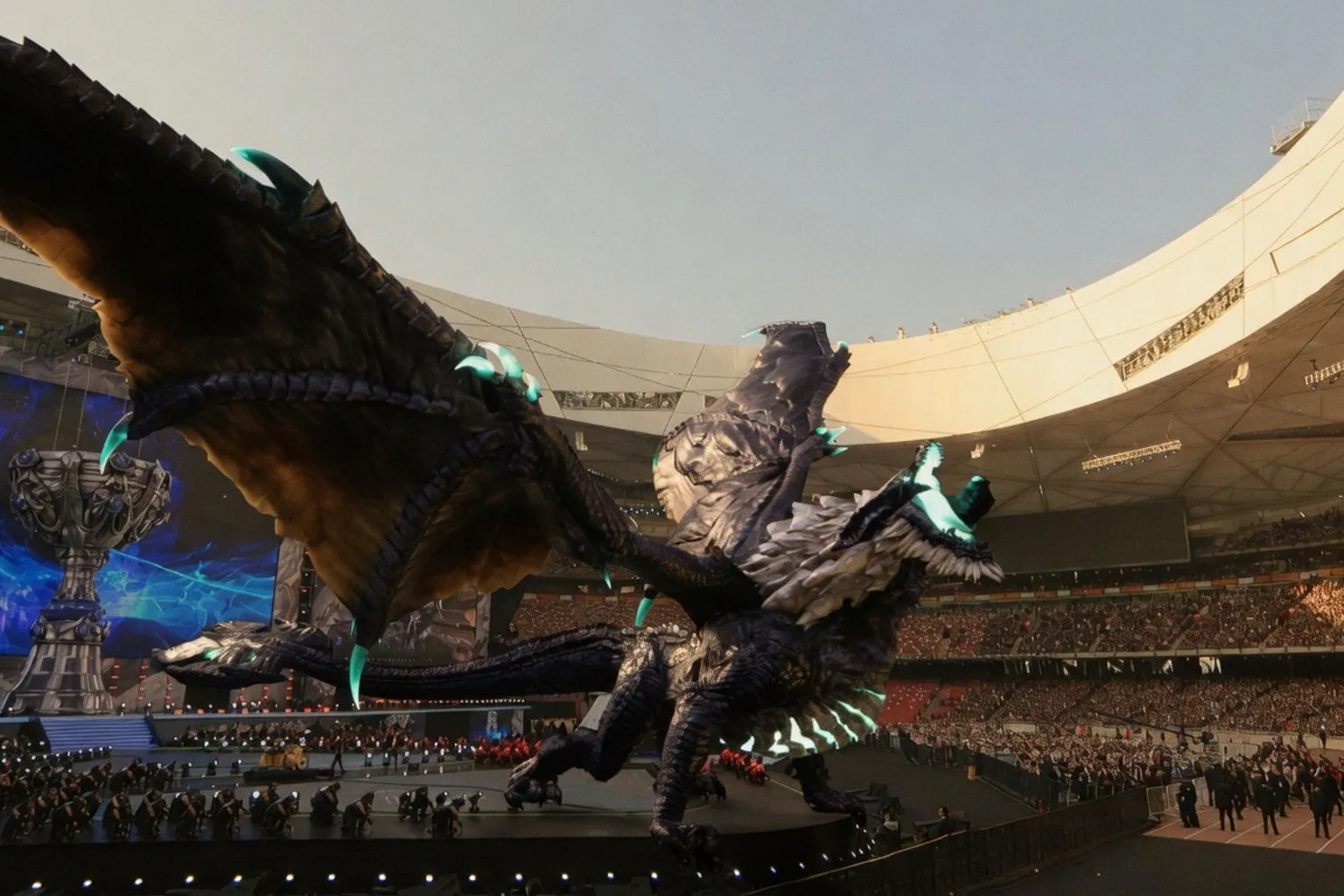
Production as product
Operators have stopped building tournaments as broadcasts and started building them as events. League of Legends Worlds and the Apex Legends Global Series now run opening ceremonies designed for the room first and the stream second — a deliberate inversion. The stage show, the music, the lighting, the fan festival outside the arena: that is the inventory. Sponsorship pricing, host-city bids, and broadcast value all flow downstream from how the event reads in person.
The economics follow from there. Bobby Hare, former Director of Host City Partnerships at ESL FACEIT Group, put it plainly in a 2024 GamesIndustry.biz interview: "Cities today are no longer just curious about esports. Now they see the immediate impacts, with economic impact being a huge one. They see that our events are global and they attract a huge international audience, with millions more watching online." When cities start competing for the dates, the operator's production budget opens up.
The template and its variations
Riot Games effectively wrote the template in 2017. Worlds ran in Beijing's Bird's Nest — the 2008 Olympic venue — and the broadcast opened with "Legends Never Die," performed with rock band Against The Current as the season's anthem. That ceremony was designed to land on social media, in highlight reels, and in the live crowd in the same moment. Other publishers have since adopted the structure: anchor musical act, custom stage, city-coded production design.
The variation now is scale. Recent announcements tracked across the scene show the template spreading to new properties and geographies. Crypto Briefing reports the Esports World Cup 2026 heading to Paris with a reported $75 million prize pool and crypto sponsors attached. Esports Charts is tracking the 2026 Asian Games Mobile Legends: Bang Bang qualifiers as a flagged event on its calendar. Tuoi Tre News covered the launch of a Vietnamese national tournament carrying a $40,000 prize pool. Different tiers, same playbook.
What it means for the bracket
None of this replaces the competition. T1 and Bilibili Gaming still had to win their series to put 6.94 million viewers in front of a trophy lift. But the operator that treats the event as a live product — arena, ceremony, festival, sponsor loadout — is now setting the price floor for everyone else. Host cities, sponsors, and publishers will price to that ceiling through 2026, and the events that fail to clear the production bar will struggle to justify their venue costs regardless of how strong the bracket looks on paper.