Meta tier list evolution: how ranking systems shape esports
A meta tier list now functions as more than a community shorthand for “strong” and “weak.” It is a decision-making layer in the competitive ecosystem.
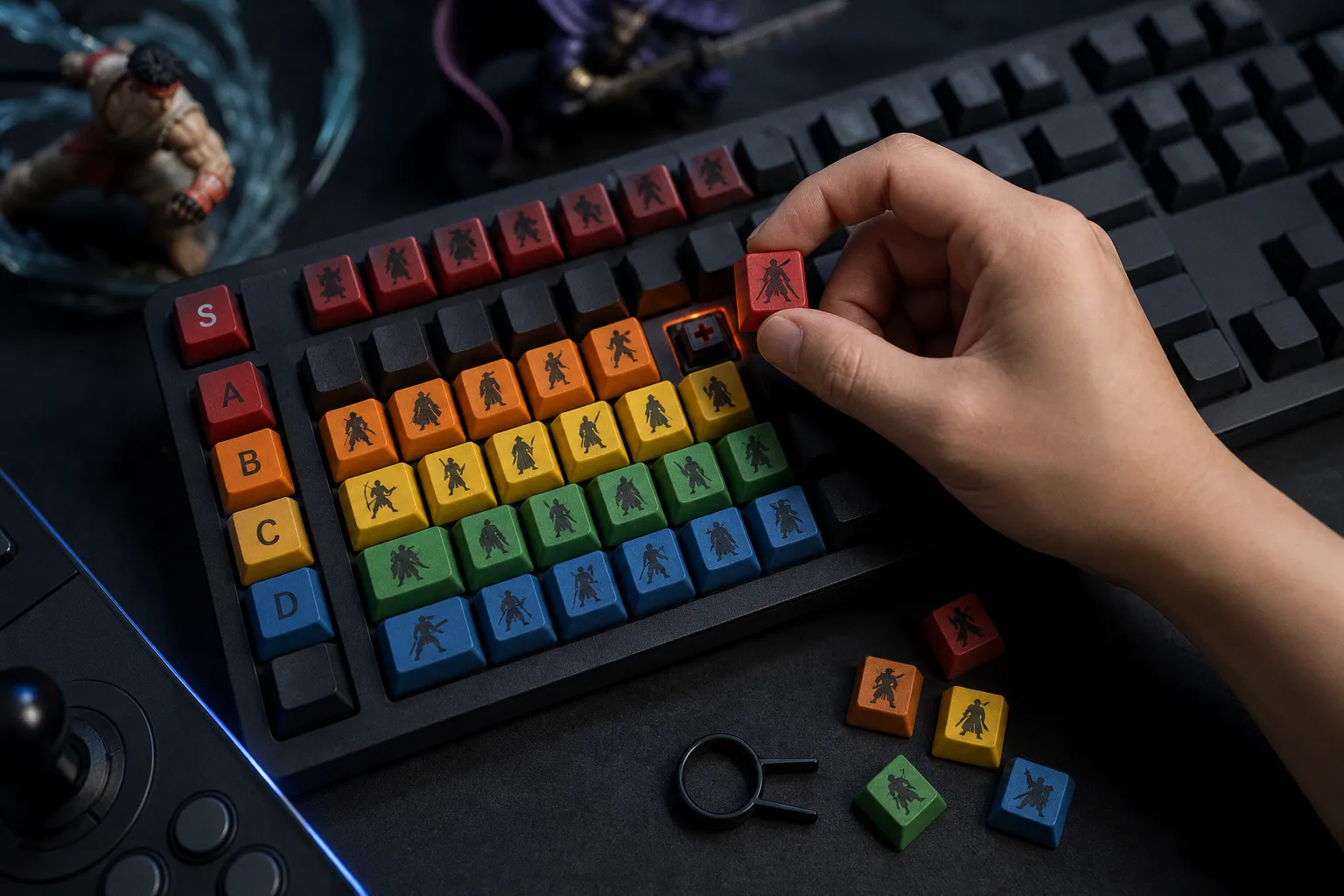
Teams use it to allocate scrim time, coaches use it to structure draft preparation, tournament broadcasts use it to frame narratives, and publishers watch it as an early signal that a balance update may be producing an unhealthy concentration of power.
That influence was not built overnight. The evolution of gaming tier lists runs from arcade-era arguments over character viability to data-driven ranking systems processing millions of match records through APIs. The format has remained familiar—S through F, with a handful of contested placements—but its operational role has changed substantially. A list that once summarized accumulated player opinion can now shape the market for practice, strategy and, indirectly, roster value.
The arcade origin: viability before analytics
The earliest esports tier list history cannot be separated from the rise of competitive fighting games. Capcom’s Street Fighter II, released in arcades in 1991 and later selling 6.3 million copies on the Super Nintendo Entertainment System, created the conditions for a more systematic discussion of character strength. Players were no longer simply asking which character felt powerful. They were trying to establish which characters could reliably perform across matchups, under tournament rules, against informed opposition.
That distinction matters. A character’s perceived strength may come from a spectacular combo, an unfamiliar gimmick or a punishing tool that succeeds until opponents adapt. Competitive viability is a more demanding proposition. It asks whether the character has stable answers, favorable or manageable matchups, repeatable win conditions and enough flexibility to survive a long bracket.
In the arcade environment, this evaluation was necessarily decentralized. Knowledge moved through local scenes, magazines, recordings, word of mouth and, later, early internet forums. The resulting rankings were imperfect, but they established the intellectual infrastructure still used today:
- a roster can be compared as a system rather than as a collection of isolated characters;
- matchup spread matters more than individual highlight potential;
- tournament rules can change a character’s practical value;
- player mastery and character power are connected, but they are not identical;
- a tier placement is a forecast of competitive reliability, not a promise of victory.
The modern language of “meta” makes this process sound more technical than it initially was. In practice, the first tier lists were governance documents for competitive communities. They helped scenes establish a common view of what deserved preparation, what required counterplay and what might eventually demand a rules response.
The first documented Super Smash Bros. Melee tier list dates to October 8, 2002. In 2005, a user known as “Nothing” posted a modern forum-format ranking of the Tekken 4 roster. These were not publisher-sanctioned reports. They were community-built attempts to convert dispersed competitive knowledge into an intelligible hierarchy.
A tier list began as an argument about viability. It became an operating model for competitive preparation.
Why S-tier became the industry’s shorthand for strategic priority
The S-tier label is now ubiquitous across esports, but its origin is often flattened into generic internet culture. The designation comes from Japanese academic grading systems, where shū () denotes something excellent or exemplary—a grade above A rather than merely the next letter in a Western-style sequence.
That origin explains why S-tier carries a different strategic implication from “very good.” In a competitive setting, S-tier usually indicates that a pick combines multiple advantages at once: strong baseline output, resilience across common matchups, low dependence on exceptional conditions, and a draft or game-state impact that forces opponents to react.
The standard hierarchy—S, A, B, C, D, E and F—looks simple because it is simple. Its value lies in compression. A large roster, particularly in a live-service game with frequent balance updates, is difficult to discuss without a shared language for priority. The tier list gives analysts, coaches and viewers a usable frame.
But that compression also creates a governance problem. Once a hero, champion, weapon or character enters S-tier, the label can acquire an influence beyond the evidence supporting it. Players may abandon viable alternatives. Scrim partners may over-prioritize the same matchup. Teams with limited practice capacity may redirect resources toward a perceived mandatory answer. In other words, the list begins to affect the environment it is attempting to describe.
For organizations, this is where a tier list becomes relevant beyond content production. A broad meta shift can change the return on investment of existing player specializations. A roster constructed around a narrow pool may look efficient under one patch and structurally exposed under the next. Conversely, a flexible player whose value was understated in a stable meta may become central when a patch expands the viable pool.
The tier list therefore has two audiences with different needs:
| Audience | What the tier list provides | What it cannot provide |
|---|---|---|
| Ranked players | A starting point for selecting efficient, broadly viable options | A substitute for matchup knowledge or mechanical execution |
| Coaches and analysts | A map for draft priorities, bans and scrim allocation | A complete account of team-specific systems |
| Professional players | A signal of where practice demand is likely to concentrate | Proof that a character fits their individual strengths |
| Tournament viewers | A concise explanation of recurring picks and bans | The tactical logic behind each series |
| Game publishers | An early indicator of possible power concentration | A definitive balance verdict without deeper segmentation |
The corporate lesson is straightforward: tier categories are useful because they reduce complexity, not because they eliminate it. The strongest competitive departments understand the difference.
From forum consensus to API telemetry
The largest change in how meta tier lists are made is not visual. It is methodological. Early lists depended on expert observation and community debate. Contemporary analytics platforms can process API-derived data across rank brackets, regions and patches, incorporating variables such as win rate, pick rate, ban rate, KDA, gold generation and composite measures including Pick-Ban Influence, or PBI.
This does not mean modern rankings have become objective in some final, unquestionable sense. The formulas used by major platforms remain proprietary, and that is commercially understandable. A ranking product is an analytical asset; its weighting model is part of its competitive differentiation. What has changed is the scale of evidence available to support or challenge a judgment.
A modern data pipeline can separate Platinum-and-above play from the narrower Diamond-to-Radiant equivalent bands used in some ecosystems. It can compare performance before and after a balance update. It can flag a sudden rise in bans even if the raw win rate has barely moved. It can also identify whether a weapon’s performance is being driven by a single map, a narrow role, a high-skill subset or a broader systemic advantage.
That segmentation is essential because matchmaking systems tend to pull long-term performance toward a 50% win-rate baseline. A character sitting near 50% is not automatically balanced, just as a character above 52% is not automatically dominant. Context determines the meaning of the number.
Consider two hypothetical entries in the same patch:
| Metric | Champion A | Champion B |
|---|---|---|
| Win rate | 53.4% | 51.1% |
| Pick rate | 1.8% | 28.6% |
| Ban rate | 0.4% | 46.2% |
| Likely interpretation | Specialist counterpick or one-trick success | Broad draft pressure and ecosystem-wide concern |
Champion A may be genuinely powerful, but a low pick rate can indicate a narrow group of dedicated specialists or a favorable counterpick niche. Champion B, despite the lower win rate, is exerting far greater pressure on the competitive environment. Its ban rate signals that opponents do not want to play into its conditions; its pick rate shows that many players can extract value from it. In a professional draft, that combination is often more consequential than a two-point difference in raw win percentage.
This is the central advantage of data-driven tier lists: they make it harder to confuse isolated efficiency with structural dominance. They do not remove judgment. They give judgment a more disciplined foundation.
Pick-ban influence is closer to the real competitive question
Win rate remains the most visible statistic because it is intuitive. A player sees 54% and concludes that the pick wins. Yet esports decisions are rarely made in a vacuum. Teams do not draft into average conditions; they draft into bans, targeted counters, map priorities, side selection, comfort pools and game plans constructed around an opponent’s tendencies.
Pick-Ban Influence is valuable because it captures part of that strategic reality. A high PBI profile indicates that a character is shaping choices even when it is not selected. That indirect impact is frequently the first sign that a patch has altered the game’s infrastructure rather than merely improving an underused option.
A practical analysis of a meta tier list should therefore ask four questions in sequence:
1. Is the performance signal broad or narrow?
A strong win rate across a large sample and multiple skill brackets carries a different weight from a high win rate in a tiny specialist population.
2. Does the pick constrain opponent behavior?
Ban rate, first-pick priority and forced counterpicks reveal whether the character changes draft architecture.
3. Is the advantage patch-specific or durable?
A sudden spike immediately after a balance update may reflect discovery lag. A trend that persists after adaptation is more likely to represent a durable meta shift.
4. Can the advantage be transferred into professional play?
Solo-queue success does not automatically survive coordinated teams. Conversely, a tool that looks manageable in public matches may become oppressive when enabled by structured communication and disciplined resource allocation.
These questions are particularly relevant for organizations managing long-term competitive projects. A team that reacts to public win rates alone can waste valuable practice cycles. It may overcorrect toward a fashionable pick, weaken its existing identity and enter an event with less strategic depth than before. The better approach is to treat public data as market intelligence, then test it against internal scrim evidence and roster-specific execution.
The decisive metric is not whether a pick wins more often in isolation; it is whether it forces the rest of the lobby to reorganize around it.
This is also why the most reliable tier lists increasingly distinguish between ranks, roles, maps and formats. A champion may be S-tier in high-level solo queue, merely A-tier in coordinated play, and a liability on a particular competitive map pool. One universal list is convenient for publication, but it is not always sufficient for operational planning.
Meta Knight and the point where ranking becomes regulation
The most instructive historical case is Super Smash Bros. Brawl’s Meta Knight. His dominance was not merely a matter of favorable perception. The character’s position relative to the roster became so extreme that he shaped the metagame around himself, appeared in a unique tier of his own and prompted tournament bans in parts of the competitive community.
Meta Knight demonstrates the point at which a tier list stops being descriptive and becomes regulatory. If a character is broadly accepted as the superior choice, competitive incentives begin to narrow. Players who want to maximize results gravitate toward the same option. Counter-strategy focuses disproportionately on that option. Tournament organizers confront a difficult choice: preserve the game as shipped, or intervene to protect competitive variety and participant confidence.
This is not a trivial governance question. Bans alter the ruleset, and rulesets alter the value of player skill sets, character investments and team preparation. An intervention may restore diversity, but it can also fragment a scene if communities adopt different standards. The Meta Knight case is therefore less a historical curiosity than a reminder that balance failures carry organizational costs.
For publishers of contemporary live-service titles, the equivalent pressure usually appears earlier and through different channels. Large-scale telemetry exposes abnormal pick-ban patterns more quickly. Patch cadence allows targeted nerfs, buffs and exploit fixes without waiting for a new boxed release. Yet the underlying business issue remains the same: a competitive game needs enough strategic plurality to sustain player trust, audience interest and professional investment.
An over-centralized meta reduces the effective size of the roster. It can also reduce the return on investment in player development. If every high-stakes match requires the same small selection of heroes or weapons, organizations have less reason to cultivate distinct strategic identities. The circuit becomes easier to read, but poorer to watch.
Tier lists are becoming scenario models, not static rankings
The next stage of meta analysis is unlikely to be a single smarter list. It will be a more segmented one. Rather than asking which champion is best, competitive departments increasingly need to ask: best for which rank, which map, which side, which draft phase, which team composition and which opponent profile?
This is where the distinction between public content and internal competitive infrastructure becomes clearer. Public tier lists need clarity. They must make a complex patch legible within seconds. Internal models can afford to be more conditional: a hero may be premium in a specific two-character synergy, neutral without it, and actively inefficient against a defined counter package.
That does not make the visible meta tier list obsolete. It makes it the first layer of a deeper analytical stack.
For viewers, the list remains a useful map of what is likely to appear. For players, it remains a practical entry point into the patch. For teams and publishers, however, its greater value is diagnostic. It reveals where strategic capital is accumulating, where competitive diversity is contracting and where a balance update may create second-order effects across the circuit.
The evolution from arcade debate to API telemetry has not removed the human element from tier-making. Experts still decide which variables matter, how to interpret abnormal samples and when an apparent trend has become a real meta shift. What data has changed is the quality of the argument. The strongest rankings no longer claim to identify an eternal best pick. They show how power is distributed, who is able to access it and what that distribution is likely to do to competition next.