TFT Meta Tier List: Why Top Comps Control the Board
The defining number behind any serious TFT meta tier list is not a single win rate. It is the patch clock: roughly every two weeks, Riot adjusts the battlefield, and the board state everyone thought they had solved starts losing shape. Champion stats move.
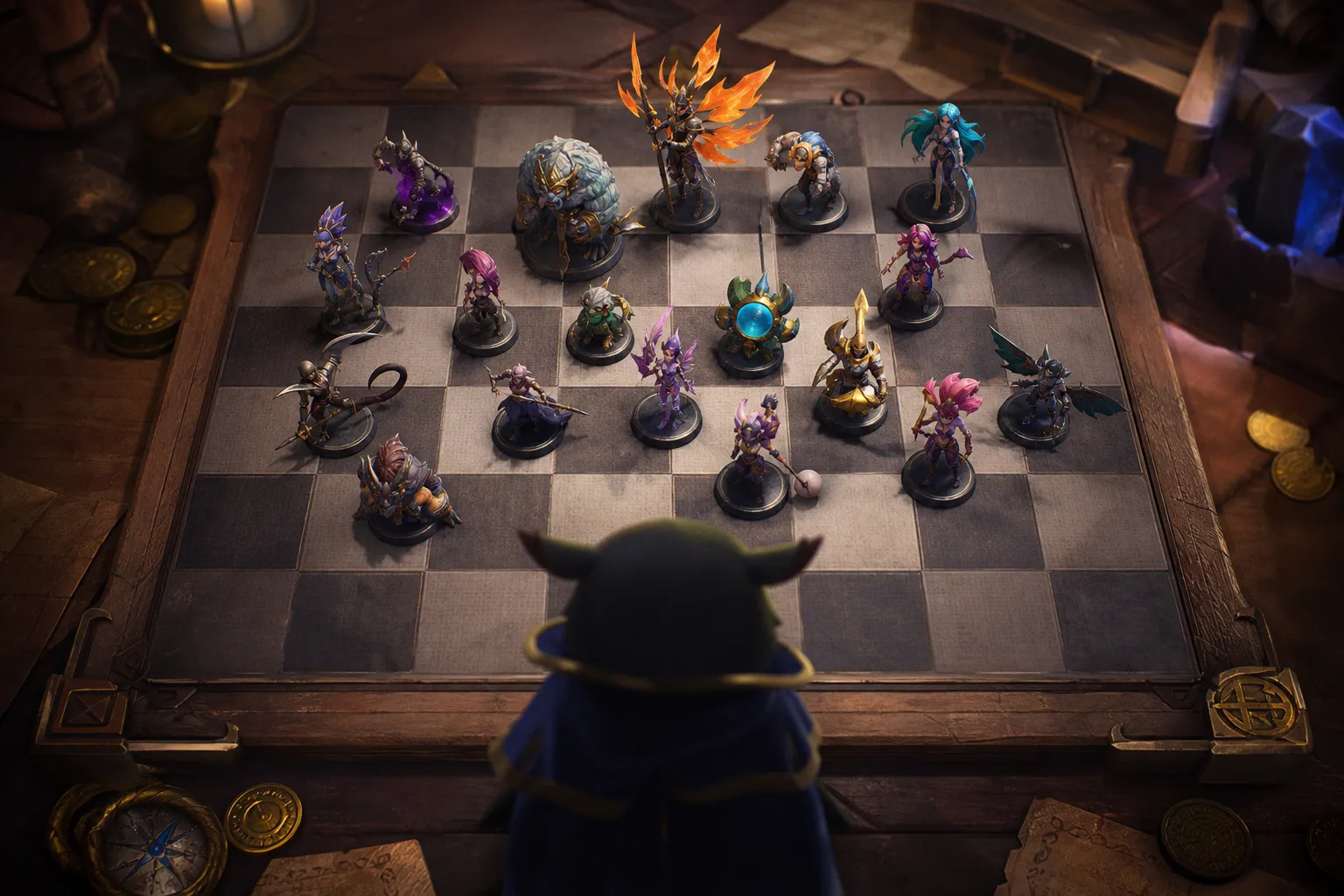
That is why the strongest builds in Teamfight Tactics are not just “the comps with the best units.” They are the comps that survive contact with the current patch: they stabilize on the right interval, convert gold into board strength at the right moment, use items without dead slots, and still have an exit when the lobby blocks the main line. S-tier, in practice, is less a label than a pressure system. It forces other players to respond.
The bi-weekly patch cycle keeps the rankings moving
The TFT patch tier list is a moving target because the game is built on small numerical pressure points. A champion does not need to be reworked to rise or fall. A modest attack speed adjustment, a trait bonus moving at a key breakpoint, or an augment losing a few percentage points of efficiency can change the route through the midgame.
That matters because TFT is not played in isolation. Eight boards are fighting for the same units, the same item components, and often the same endgame carries. When a patch makes one trait cleaner to assemble or one four-cost carry easier to stabilize around, the lobby reacts within hours. The comp’s raw power may be high, but its effective value changes once three players are holding the same pairs on the same rolldown.
A tier list, then, is a snapshot of three forces colliding:
- Patch power: what Riot has directly buffed, nerfed, or left untouched.
- Lobby behavior: how many players are forcing the same line and how early they commit.
- Execution window: whether the comp can reach its strongest board before health runs out.
The last point is often the one that separates a tournament-level read from a ladder shortcut. A composition can look dominant in final-board data, but if it requires an unbroken economy, perfect components, and no contested shop odds, the route is fragile. The cleanest S-tier comps are not always the flashiest. They are the ones that give the player enough map control over the lobby from Stage 3 into Stage 5.
A top comp is not just the board that wins the last fight. It is the line that gets there without bleeding out at the choke point.
The patch rhythm also explains why older habits become traps. Players carry over muscle memory from the previous version: they level at the same timing, slam the same item, hold the same flex unit. But if the current balance update has moved power from one-cost tempo into four-cost stabilization, or from vertical traits into splash synergies, those old decisions start costing placements. The board does not care what worked last week.
What S-tier really means: synergy, item pressure, and clean upgrades
In high-ELO lobbies, S-tier compositions often post win rates above the average because they combine three things: strong trait structure, reliable core units, and best-in-slot itemization that multiplies the carry rather than simply filling inventory space. The mistake is reading that as “play this comp every game.” The better read is: this comp has a strong conversion rate when the entry conditions are met.
The strongest TFT builds usually control at least two stages of the game. They do not merely spike at the end. They either save health early through natural upgrades, or they accelerate the midgame through a stable carry, or they hold enough gold to hit a late-game ceiling before the lobby can punish them. A comp that only comes online after a perfect Stage 4 rolldown is a gamble, not a tier-list foundation.
Best-in-slot items are where the pressure becomes visible. A carry with the correct damage scaling, sustain, or attack pattern can turn a narrow frontline into a winning fight. The same unit with mismatched items may still deal damage, but it fails the critical test: can it clear the enemy board before the frontline collapses?
There is also a tempo cost to greed. Holding components for the perfect combination can win a capped board later, but it can also concede too much health on Stage 2 and Stage 3. Strong players read the lobby and decide whether the game is asking for a slam or a wait. If three opponents are pushing tempo, the “perfect” item held on the bench may become a liability. If the lobby is slow and economy-heavy, waiting can preserve a higher ceiling.
A practical way to read S-tier is not by the comp name, but by its stability profile:
| Parameter | Reliable S-tier line | Fragile high-roll line |
|---|---|---|
| Early board | Can use multiple item holders without losing direction | Needs specific opener or early pairs |
| Item flexibility | Several acceptable slams keep the line alive | One or two BIS items define the entire outcome |
| Level timing | Stabilizes on standard intervals such as Level 7 at Stage 4-1 or Level 8 at Stage 4-2/4-5 | Requires delayed greed or an early high-roll to function |
| Contested risk | Has pivots if another player blocks the shop | Collapses when two players contest the same carry |
| Augment dependency | Strong with good augments, still playable without perfect ones | Needs a specific augment to reach top-tier power |
This is where the teamfight tactics meta becomes tactical rather than decorative. The tier list gives the direction. The lobby gives the assignment. If the line is open, components fit, and the augment path supports it, the S-tier comp becomes a clean route to top two. If those conditions are missing, forcing it can turn a strong build into a bottom-four run.
Economy is the lever: Fast 8, Hyper Roll, and the timing of force
Gold is not a background resource in TFT. It is the pace car. The strongest players use economy to decide when the lobby fight happens, and weaker players often arrive one round late.
The standard intervals still frame many games: Level 7 around Stage 4-1, Level 8 at Stage 4-2 or 4-5 depending on health, gold, and board strength. Those timings are not rituals. They are pressure calls. Level early, and the player buys access to stronger units and a first strike at the four-cost pool. Wait too long, and the lobby may drain the shop before the board can stabilize.
Fast 8 and Hyper Roll sit on opposite ends of that tempo map.
Fast 8 is the line for players who can preserve health while building economy. The goal is to reach Level 8 with enough gold to roll for premium four-cost and five-cost units, often converting a playable midgame board into a high-ceiling endgame. It is strongest when the player has a stable Stage 2 and Stage 3, clean item direction, and enough health to absorb one weak rolldown round.
Hyper Roll takes the fight earlier. It burns gold to chase three-star low-cost units, turning Stage 3 and Stage 4 into the kill zone. When it hits, it punishes greedy players who are sitting on pairs and interest thresholds. When it misses, the economy reset is brutal. The board can stall out while Fast 8 players move into superior unit quality.
Neither approach is inherently better. The patch decides which one gets more room. If one-cost or two-cost reroll carries are overtuned, Hyper Roll and slow-roll structures gain value. If four-cost carries define the patch, Fast 8 becomes the central lane of the lobby. A good TFT meta tier list should reflect that timing, not just the final board.
There is a simple sequence that separates controlled economy from panic rolling:
1. Identify the opener without overcommitting. Early pairs, item components, and first augment should suggest a direction, not lock the entire match before the shop has spoken.
2. Measure health against lobby tempo. If multiple boards are already spiking, greed becomes expensive. If the lobby is soft, economy can be protected.
3. Choose the rolldown stage before the crisis. Waiting until 28 health and a broken frontline is not strategy; it is damage control.
4. Roll to stabilize, not to fantasize. The first target is a board that stops the bleeding. The capped version can come later.
5. Rebuild economy after the spike. A strong rolldown that leaves no gold and no future upgrade path can still lose the series point of the lobby.
That “series point” in TFT is usually the round where a player either stabilizes or disappears. Stage 4-2 often carries that weight in Fast 8 games. Stage 3-2 or Stage 3-5 can carry it in reroll lobbies. The timing changes, but the principle holds: economy is only valuable if it converts into combat power before the next opponent breaks through.
Augments are the variable that can overturn the board
Augments are the reason tier lists need caution labels. A B-tier composition with the right augment can play like an S-tier threat. A normally elite line with poor augment support can become underpowered, especially if the items do not cover the gap.
The strongest augment choices do one of three jobs. They either sharpen a comp’s main win condition, protect the economy route that gets the comp online, or create flexibility when the lobby blocks the original plan. The first category is the easiest to see: combat augments that boost the carry or frontline. The second is often more important over a full game: economy and leveling augments that let the player hit the key interval ahead of schedule. The third is where expert play shows. Flexible augments keep options open and reduce the cost of pivoting.
Patch changes to augment power levels can shift the entire meta without a dramatic champion buff. If a reroll-supporting augment gets stronger, low-cost boards gain a cleaner entry. If a leveling or economy augment becomes more efficient, Fast 8 lines gain a wider runway. If combat augments are trimmed, comps that relied on them to cross a damage threshold may fall back into the pack.
Augments do not sit beside the meta. They cut through it, changing which boards can afford to exist.
This is why “tft strongest builds” can be misleading if read as fixed recipes. The build is the visible board. The augment path is the hidden engine. Two players may run the same units, but one has the damage multiplier, the economy cushion, or the trait access that makes the formation coherent. The other has a board that looks right and fights wrong.
In live analysis, the key question is not “Which augment is best overall?” It is “What does this board lack right now?” If the frontline is collapsing, more backline damage may not solve the fight. If the carry is surviving but failing to finish units, sustain may be less urgent than burst or scaling. If the board is strong but the economy is empty, a greedy combat pick may win one round and lose the next five.
Why no composition is truly unbeatable
TFT has variance built into every layer: shops, items, augments, matchmaking order, carousel access, and opponent positioning. That does not make analysis useless. It makes rigid claims dangerous. No current composition should be treated as unbeatable, because every top line still has counters in tempo, contesting, positioning, and economy pressure.
Contesting is the most obvious. If a comp needs a specific four-cost carry and three players roll for it on Stage 4-2, the strongest theoretical board becomes a choke point. The player who recognizes the traffic and pivots may finish higher than the player who “knows the tier list” and refuses to leave the lane.
Positioning is the quieter counter. A backline carry can be pulled into bad targeting. A frontline tank can be bypassed or isolated. Splash damage, crowd control, and flank angles all change fight outcomes. At high levels, a single late scout can decide whether a fight is won by two units or lost before the carry casts. The board may be correct in composition and still wrong in placement.
Item variance also matters. A comp designed around sustained damage will not always function with burst-only components. A frontline that needs durability cannot pretend that spare offensive items solve the problem. Strong players do not simply chase BIS; they identify acceptable substitutes and adjust the board’s job around them. If the items say tempo, they play tempo. If the items say cap, they buy time.
The healthiest way to use a TFT meta tier list is as a scouting report, not a script. It tells the player where the lobby pressure is likely to form. It identifies which comps have the best statistical profile under current conditions. It warns which units and traits will be contested. But once the game begins, the tier list has to be filtered through the actual shop, actual augments, and actual opponents.
That is where the competitive edge sits. Not in memorizing ten final boards, but in knowing when a board is available, when it is blocked, and when the patch has quietly moved the win condition elsewhere.
Reading the current meta without chasing ghosts
Because TFT shifts on a bi-weekly patch cycle, the first hours after a balance update are always noisy. Players test buffed units. Popular stream lines flood the ladder. Old comps are declared dead too quickly, then return once someone finds the right item or augment structure. The tier list hardens only after enough high-ELO games expose which boards can survive pressure.
Even then, regional and ladder behavior can distort the picture. A composition may dominate one pocket of the ladder because it is underplayed there, while looking weaker elsewhere because it is heavily contested. Another may have a modest average placement but a strong top-one rate when hit properly. That distinction matters. Some comps are built to secure top four; others are built to win the lobby but fail hard when the upgrades do not arrive.
For players trying to navigate the teamfight tactics meta, the useful questions are direct:
- Is the comp strong because the patch supports it, or because players are not contesting it yet?
- Does it stabilize on Level 7, or does it need Level 8 before it becomes real?
- Can the items be slammed early, or do they require a risky wait for perfect components?
- Which augment types raise the ceiling, and which ones merely keep the board playable?
- If the main carry is blocked, what is the pivot that uses the same items?
Those questions do more work than copying a static board image. They force the player to read the lobby as it develops. They also prevent the common error of treating S-tier as a command. S-tier means the comp has a proven route to power. It does not mean the route is open in every match.
The current TFT ecosystem rewards players who can separate signal from noise. Patch notes provide the first signal. Early ladder results add another. High-ELO win rates and placement trends sharpen the picture. But the final read still happens on the board: who is holding what, who has gold, who is healthy, and who is about to roll.
The board belongs to the player who times the pivot
The best comps control the board because they combine patch strength with execution timing. They hit the right level window, use items efficiently, select augments that solve real problems, and keep enough flexibility to avoid dying in a contested lane. That is the practical meaning of the TFT meta tier list. It is not a trophy cabinet of final boards. It is a map of pressure.
The next balance patch will move the lines again. A trait bonus will shift. A carry will lose or gain enough power to change the rolldown. An augment will open a door that was closed last week. The players who climb will not be the ones who cling longest to yesterday’s strongest build. They will be the ones who see the economy reset coming, scout the choke point before Stage 4, and pivot while there is still health to spend.
For the current ladder, that leaves a clear implication: treat every tier list as live information. Use it to enter the lobby with a plan, not a blindfold. The winning boards are still built one decision at a time.