Patches & Meta: what to check before you decide
The Season 9 meta in Marvel Rivals has a new center of gravity, and the July 22 competitive snapshot lays it bare. Peni Parker, the spider-trap Vanguard, now sits at a 56.3% win rate — the highest figure in her role on the snapshot.
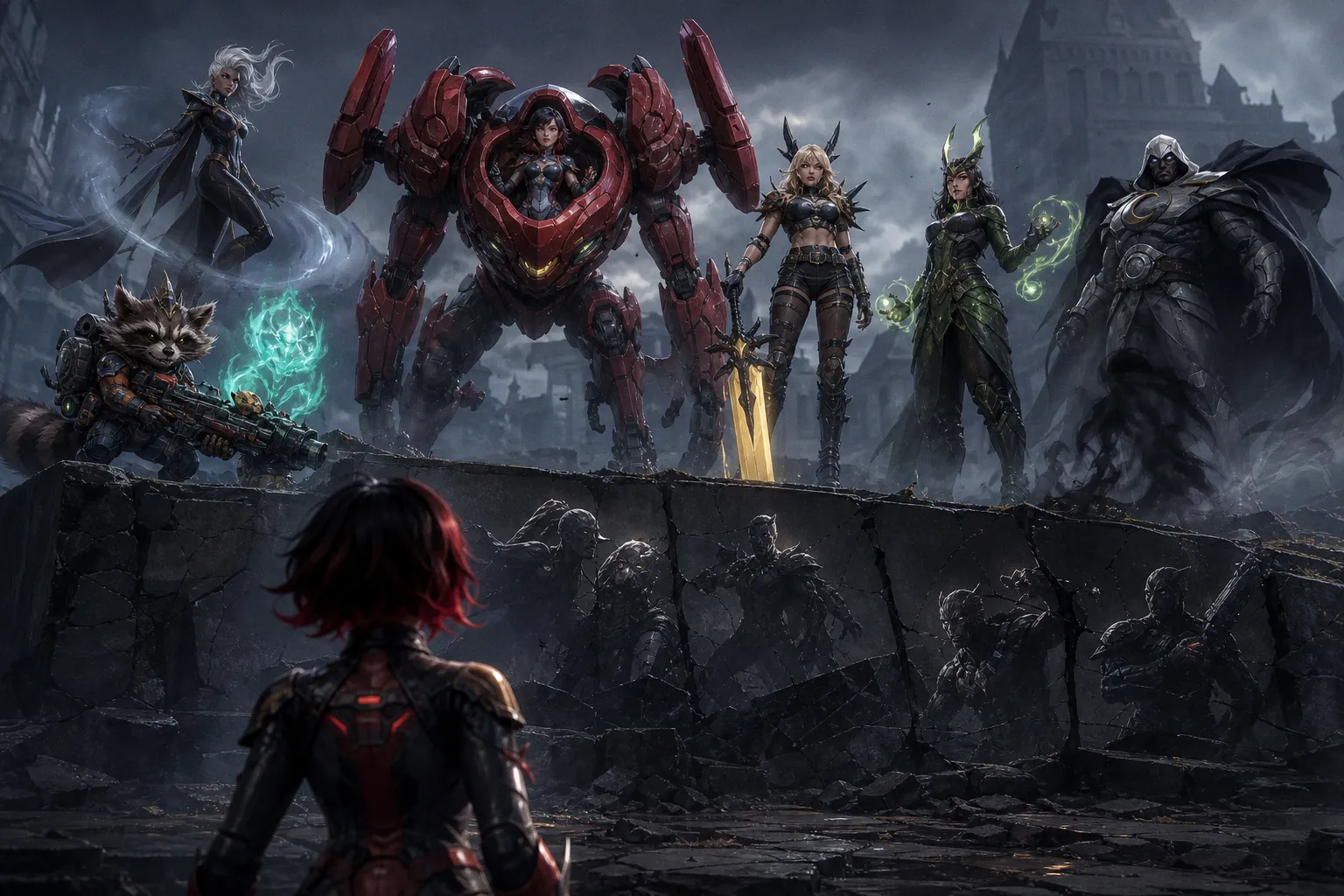
The reshuffling is not subtle. Six former marquee names have dropped out of the top conversation after direct balance adjustments. Rocket Raccoon has effectively become a roster-lock at the Strategist slot, appearing in more than a third of all competitive matches. The current balance pass has pushed the competitive scene toward dive-heavy compositions built around space denial and stacked healing. For ranked grinders and tournament coaches drafting this week, the math has changed.
The Vanguard rebalance: Peni Parker and the space-control economy
Peni Parker's ascent is not a surprise — it is the product of an ecosystem. Her 56.3% win rate reflects how the current map pool rewards her web-trap zoning and how recent patch adjustments have not meaningfully reduced her area denial. In a meta where Duelists are rewarded for committing to flanks and Strategists are rewarded for holding angles, Peni is the piece that punishes both at once. She traps a chokepoint, her team funnels the engagement, and the dive window collapses before it opens.
What makes Peni different from prior Vanguard top-sitters is the duration of her denial. A well-placed web-trap in a contested corridor does not just slow a dive — it forces a reset, costing the attacking team their engage cooldown. When the Vanguard slot is no longer a frontline durability contest but a geometry contest, Peni is the clearest expression of that shift. Heroes built to play alongside her — heroes that can hold the trapped space once it is locked — define where the fight actually happens.
The downstream effect is structural. Vanguard picks have narrowed. Teams that draft around sustained pressure rather than burst engage are winning the objective trades, and the ranked ladder data backs that read. Coordinated dive windows that worked two patches ago now eat trap damage before they reach the back line, and the cooldown economy shifts toward the team that drafted Peni.
| Role | Top hero | Win rate | Pick rate | What defines the slot |
|---|---|---|---|---|
| Vanguard | Peni Parker | 56.3% | — | Space denial, trap zoning, dive punishment |
| Duelist | Magik | 55.3% | — | Bonus Health sustain, flank survival, cleanup conversion |
| Strategist | Rocket Raccoon | 54.7% | 35% | AoE healing, resurrection utility, mandatory backbone |
The 35% pick rate on Rocket is the number to watch. When a single hero is locking in more than a third of all matches at his role, he is no longer a meta pick — he is a meta condition. The draft math has to account for him whether he is picked or banned, and the team that solves that constraint first gets a free edge.
Duelist dynamics: Magik at 55.3% and the sustain shift
At the Duelist slot, Magik holds the top line at a 55.3% win rate. Her edge is not raw damage — it is Bonus Health sustain. In a meta where dives commit hard and resets come from burst, Magik survives the initial window and converts the cleanup. She is the Duelist that does not need a pocket heal to stay in the fight, which matters when Rocket Raccoon is busy AoE-healing the front line.
The mechanics behind her dominance are simple to read. Bonus Health does not decay the way shields do, and Magik's kit lets her regenerate the bonus pool faster than most duelists can punch through it. In an extended fight, she wins the resource trade by default. The opponent has to either burst her down in a single rotation — which few duelists can reliably do — or accept that her second-engage window will be stronger than her first.
The implication for draft is direct. Magik slots into compositions that already control space — she does not need to create it. She flanks, takes the Bonus Health trades, and hands the cleanup to the team. Duelists who rely on opening burst are now second-fiddle options unless the map geometry heavily favors them. A burst-duelist into a Magik sustain window is a losing lane, and the snapshot reflects that read.
Peni Parker is not a flavor pick. At 56.3% she is the meta, and teams ignoring her are losing the space-control math by default.
The competitive ripple runs through the entire flank-side meta. In a draft where Magik is left open, the logical move is to remove the heroes that punish her sustain window rather than ban her outright — forcing the opponent onto burst duelists that fold against the current Vanguard setup. That is the kind of draft inversion coaches should be tracking on every patch.
Strategist synergy: Rocket Raccoon, Mantis, and the triple-support stack
The Strategist role is where the Season 9 meta shows its clearest signature. Rocket Raccoon's 35% pick rate and 54.7% win rate make him the most reliable backbone in the game. His resurrection utility is the swing factor in extended fights, and his AoE healing keeps aggressive compositions alive through the punish windows. He is not flashy. He is mandatory.
Around him, the triple-Strategist composition has become a real draft threat. Mantis sits at a 54.6% win rate, thriving because her damage boosts stack multiplicatively when layered with another Strategist's aura. Storm — operating out of the Duelist slot — has climbed to a 53.9% win rate on the back of Team-Up options that spread her aura across the team. The composition logic is simple: more aura effects, more healing uptime, more fights won on objective.
What Rocket's 35% pick rate actually tells coaches is that he will draw attention. In tournament play, that kind of concentration invites first-wave bans. In ranked, where bans are less coordinated, his pick rate is what it is because no one has found a clean answer to his resurrection window yet. The teams that solve that math first will set the next tier of the meta — either by drafting a composition that ignores his resurrection timing, or by forcing the opponent into a Rocket ban and pivoting the rest of the lineup.
The demotions: Hela, Hawkeye, and the nerfed bench
The other side of the Season 9 snapshot is the casualty list. Hela, Hawkeye, Moon Knight, Iron Man, Phoenix, and Black Panther have all dropped in the tier lists after direct balance adjustments. These are not minor trims. They are nerfs that have changed what each hero can do in a coordinated match.
Hela and Hawkeye were the headliners of the previous meta's ranged burst economy. Their fall has pulled down the entire long-range poke archetype — the slow, lane-control compositions that won fights by trading from safe angles are now losing the early damage race. Moon Knight's adjustment has softened the mid-range duelist threat, removing the burst windows that made him a reliable flank counter. Iron Man and Phoenix — both aerial duelists — have lost the mobility windows that made them tournament staples, and their pick rates have followed them down the tier list. Black Panther, the textbook dive duelist, has been trimmed at the exact moment the meta is rewarding dives that survive longer windows — brutal timing for a hero built on burst engage.
What remains is power-crept, not gutted. Heroes like Star-Lord, Elsa Bloodstone, and Cyclops are still playable in coordinated hands, but they have lost the tier-list seat they once held. The bench is crowded, and the picks getting stage time are the ones that interact cleanly with the new space-control and sustain logic. Anyone still drafting the pre-Season 9 poke composition is fighting yesterday's patch.
Jubilee's debut and the Team-Up market
The mid-season addition of Jubilee has not produced an S-tier must-pick — and that is the correct read of her current placement. She sits in the A/B tier range after the rapid buff cycle to her Firework Finale, her Blooming Ball, and her Blade Team-Up synergy. She is strong. She is not defining the meta.
What Jubilee does signal is the health of the Team-Up system as a competitive lever. The same patch logic that lifted Storm to a 53.9% win rate is now being applied to newer releases. Team-Ups are no longer flavor text — they are draft considerations. Pro teams are checking which combinations stack cleanly with the current top of the tier list before locking their fifth and sixth picks, and a buff to a single node can shift two heroes at once.
The market for Team-Up synergy is where the next meta shift is most likely to originate. A buff to one Team-Up node can lift two heroes at once, and the July 22 snapshot already shows that pattern in Storm's numbers. Coaches who treat Team-Ups as a secondary system are already behind — they are the picks that decide whether a composition has the aura stacking to contest a triple-Strategist lineup. The next set of Team-Up buffs is the highest-leverage signal on the patch radar.
The tier list does not move on hero strength alone. It moves on which Team-Up nodes the developers decide to push next.
The next domino
The competitive window between snapshots is when the real adjustment happens. Teams will spend the next week solving the Magik sustain problem — either by drafting burst windows that bypass her Bonus Health trades, or by accepting the dive meta and building around it. Rocket Raccoon's 35% pick rate will draw attention in any coordinated setting; expect the opponents to force the issue at the ban phase, one way or another.
The patch log is the next signal to track. The July 23 patch notes (Version 20260723) land as a balance pass in the middle of Season 9, and they will set the ceiling for the next two weeks of competitive play. If Peni Parker's web-trap duration is trimmed, the Vanguard meta reopens. If Rocket's resurrection cooldown is touched, the triple-Strategist composition loses its anchor. If a new Team-Up node gets buffed, two heroes move up the tier list overnight — Storm's run from niche to 53.9% is the template.
The tier list is a snapshot, not a verdict. The next domino is already in motion, and the teams reading this snapshot fastest are the ones drafting into the next one.